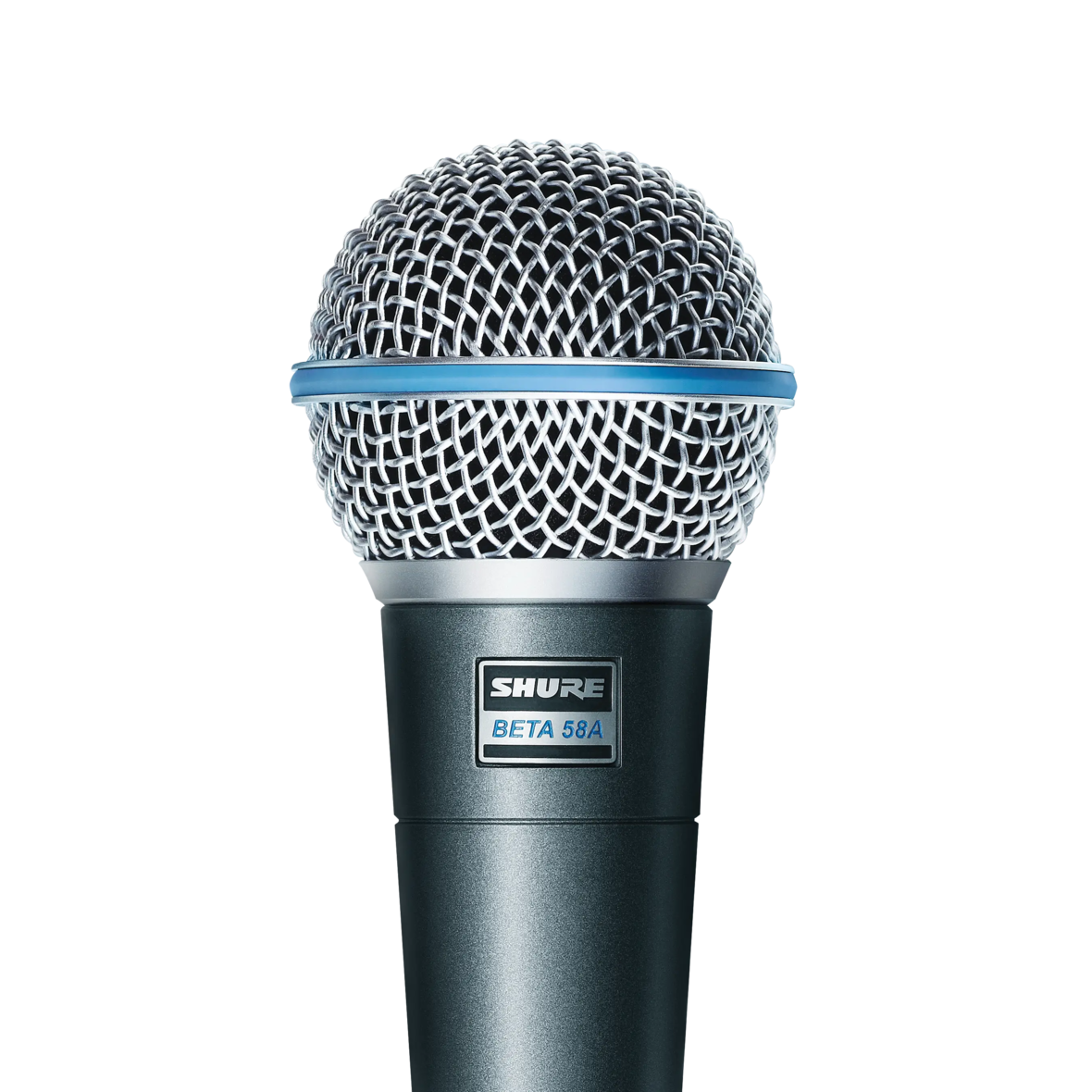
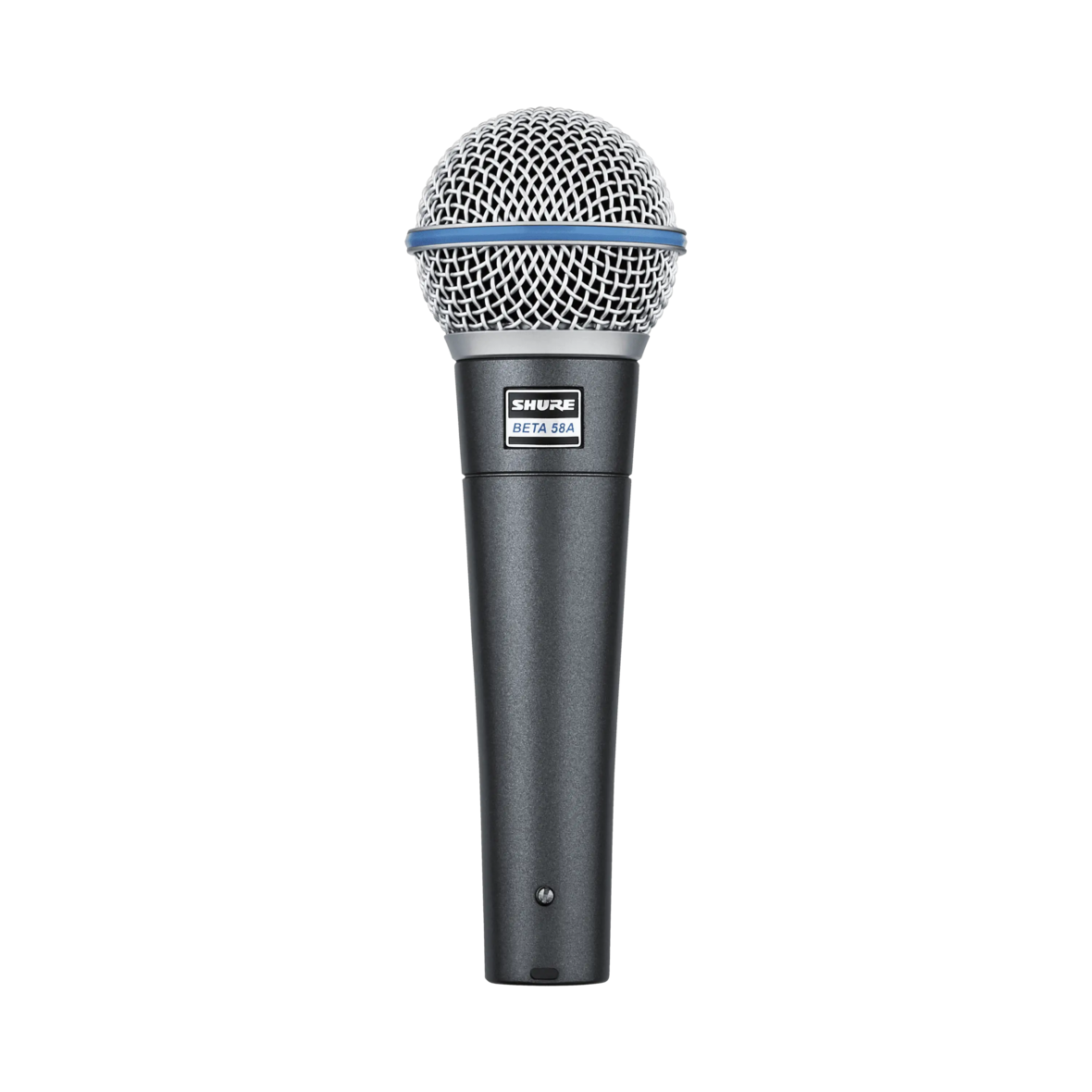
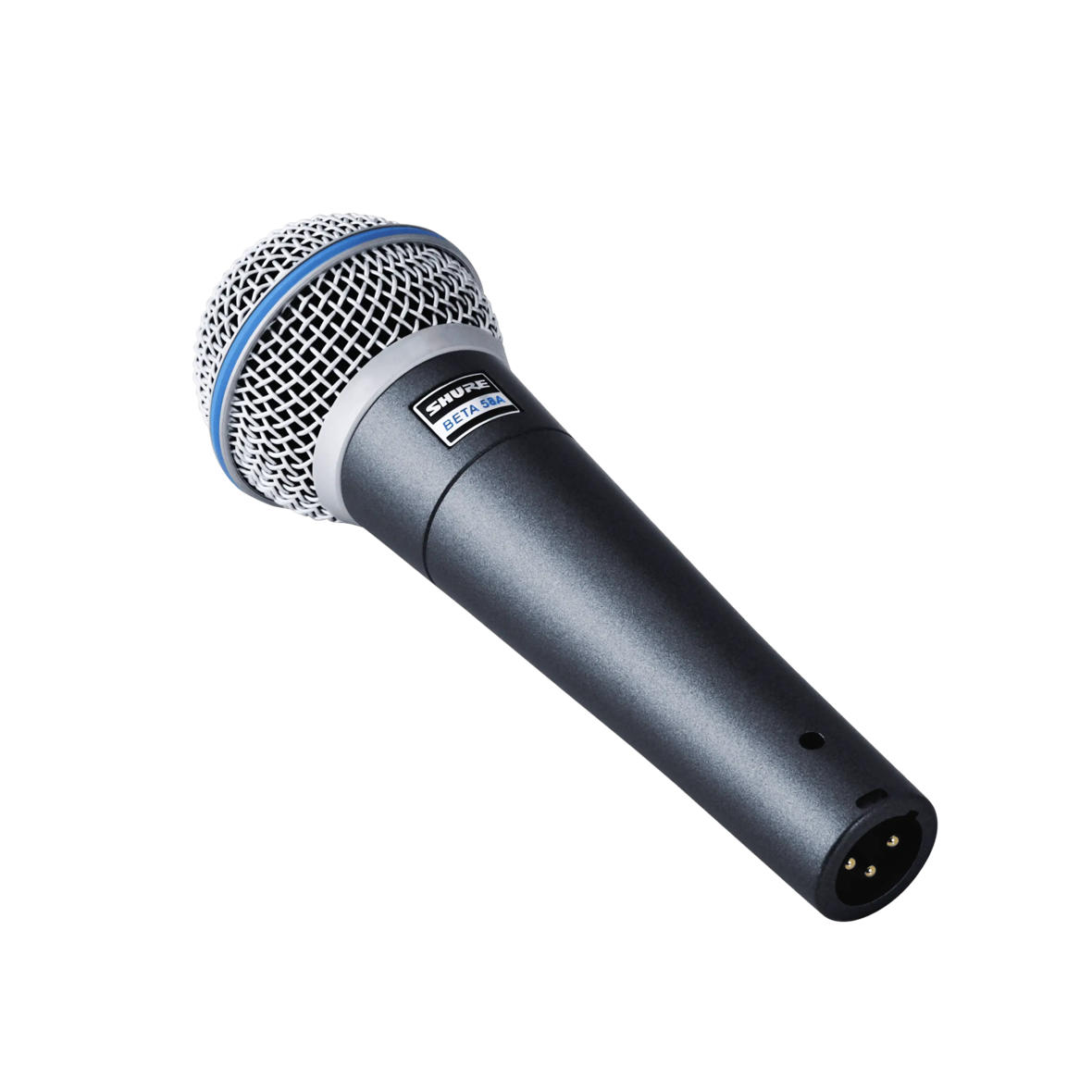
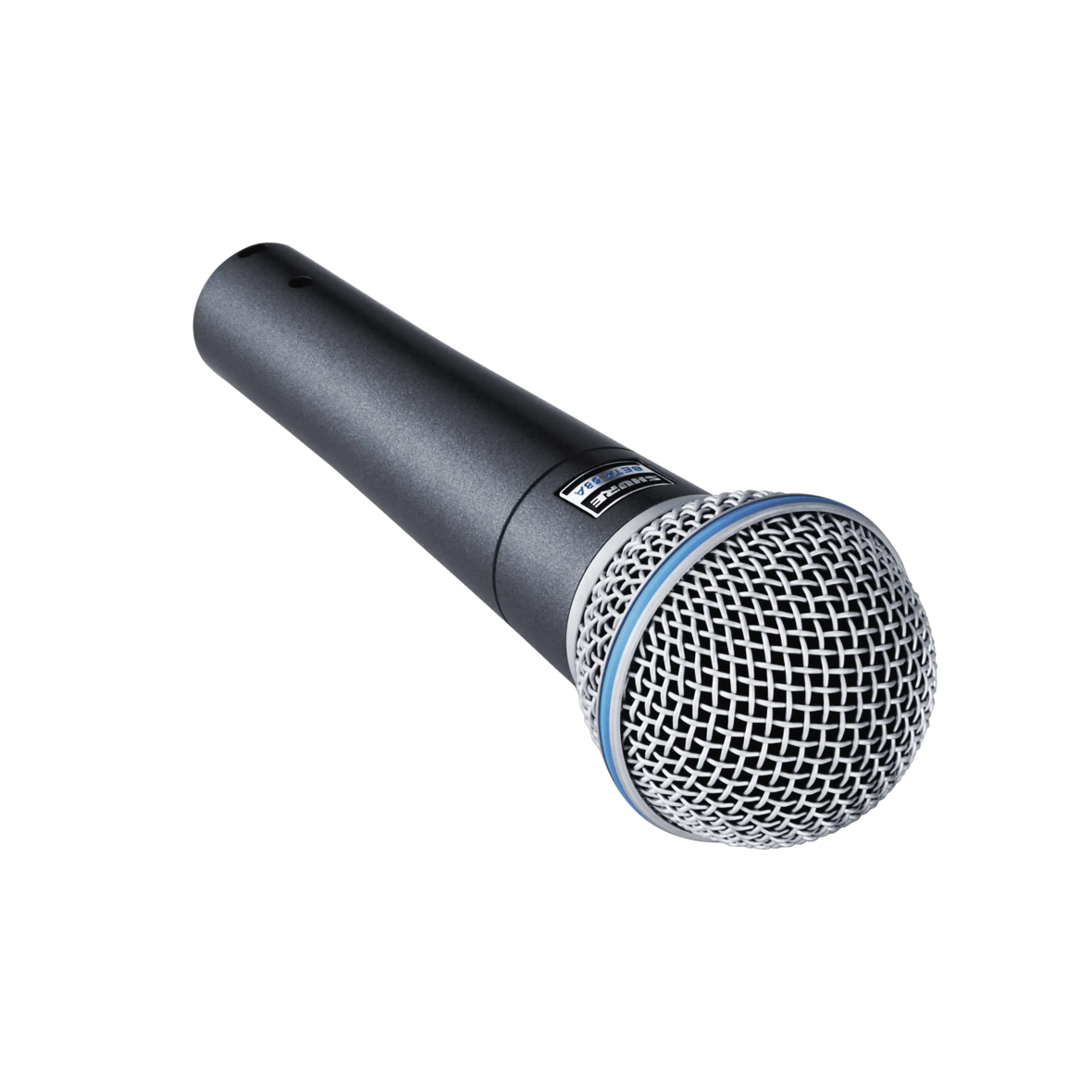
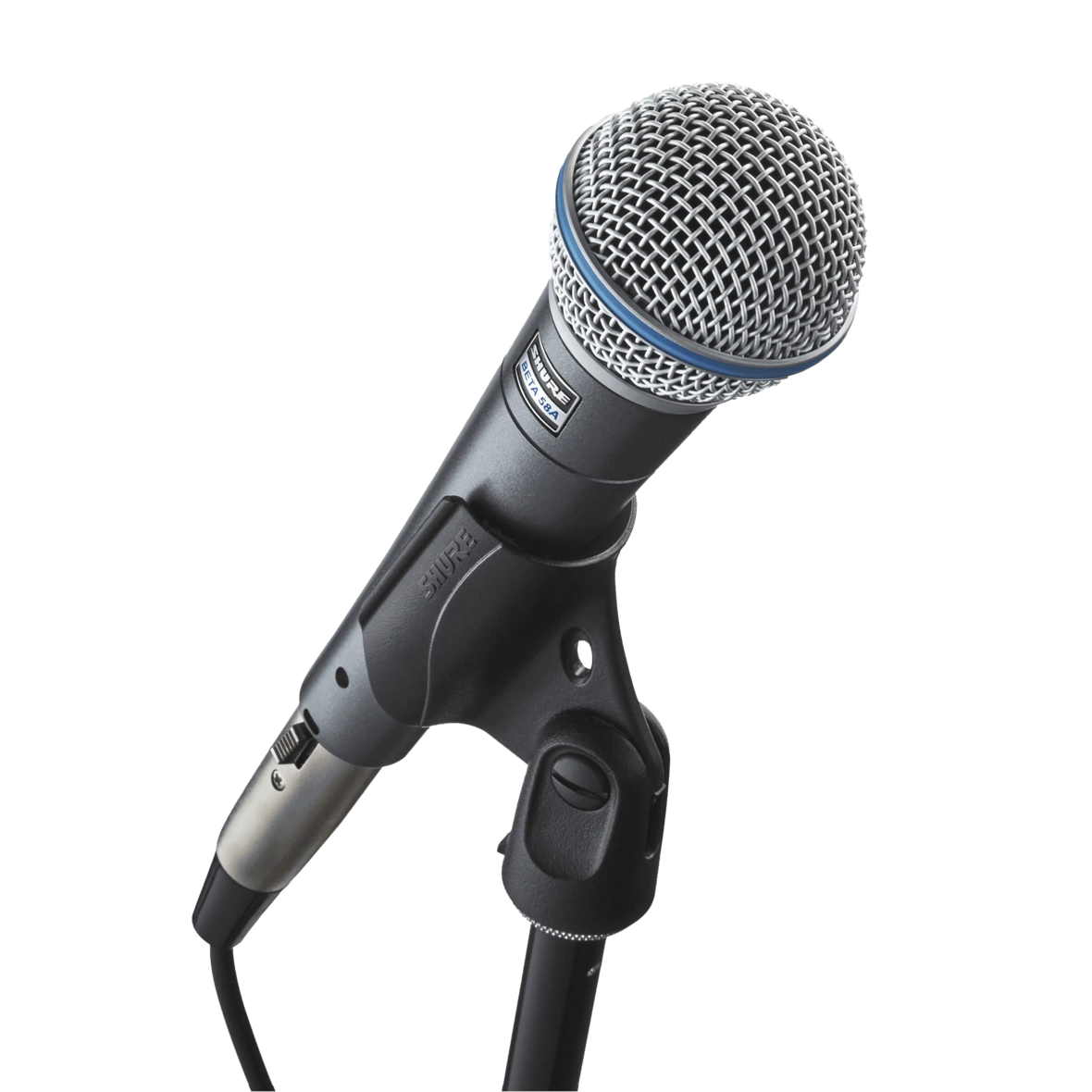
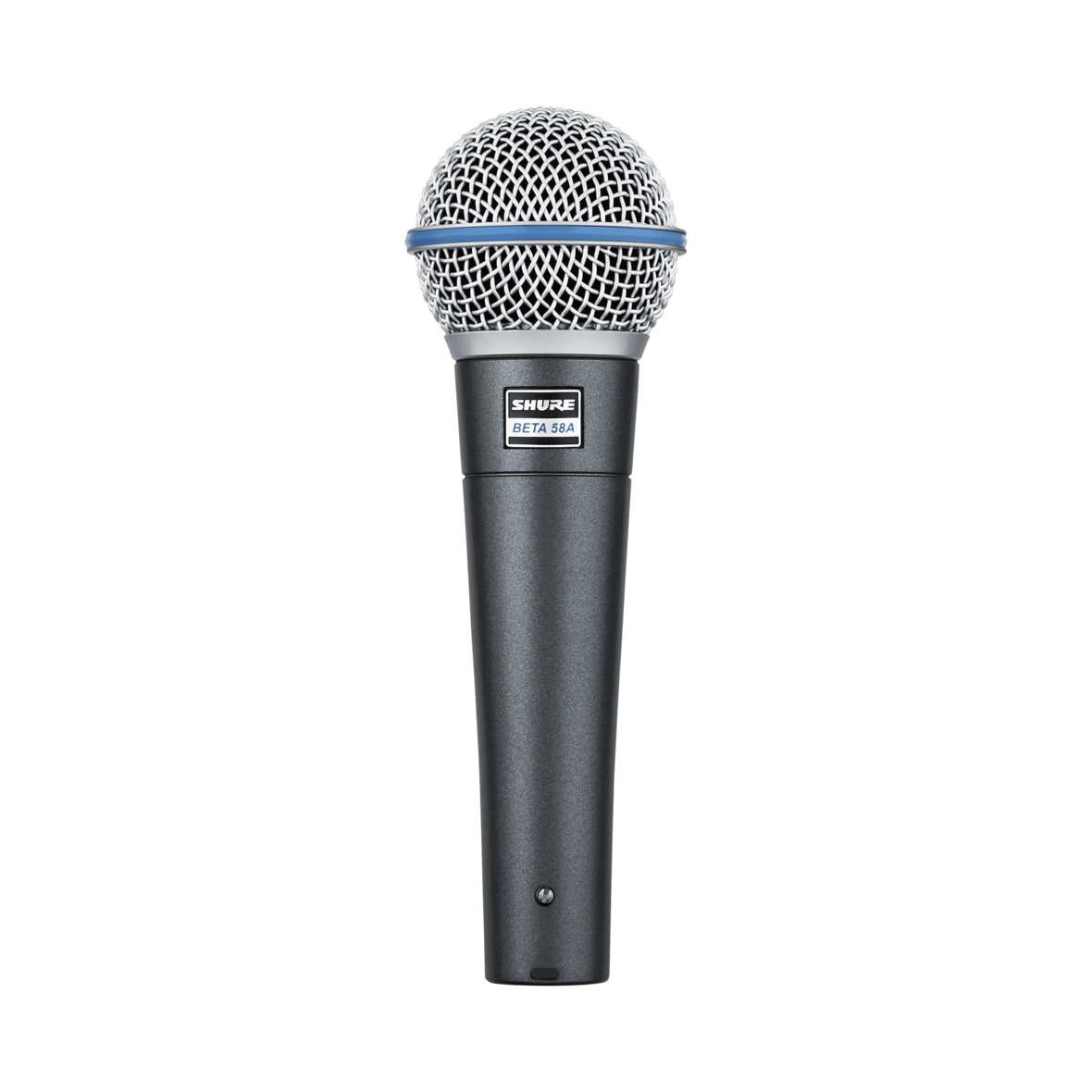




Beta 58A Vocal Microphone


Find stores in my area:


Show Online Shops

The Beta 58A dynamicDynamic mics have a simple, rugged construction and can handle very high sound pressure levels.Read moreGo to the glossary vocal microphone is precision-engineered for live performance and project studio recording. A tailored frequency responseThis is the range of frequencies, from the lowest to the highest, that a mic can pick up.Read moreGo to the glossary accentuates vocals, and the supercardioidSupercardioid microphones pick up most sound from the front, and less from the sides.Read moreGo to the glossary pattern isolates from other sound sources.

Where to buy

Best suited to:
Vocals

Also great for:
Speech

Dynamic
Super Cardioid
RRP: £ 187.16
  Go to comparison
  • Description
  • Features
  • Specs
  • Downloads
  • In the box

What is the BETA58A best suited to?

The BETA58A is a premium vocal mic ideally suited for professional lead and backup vocals, either on stage or in the studio.

How does this compare to the legendary SM58?

Both are designed for vocal use and have a bright midrange and bass roll-off. The BETA58A has increased sensitivityThis is how mich signal a microphone produces for a given amount of sound.Read moreGo to the glossary and high-end frequency responseThis is the range of frequencies, from the lowest to the highest, that a mic can pick up.Read moreGo to the glossary which results in a cleaner more detailed sound. It also features a supercardioidSupercardioid microphones pick up most sound from the front, and less from the sides.Read moreGo to the glossary polar pattern"Polar pattern" describes how well the microphone “hears“ sound from different directions.Read moreGo to the glossary compared to the SM58’s cardioidPicks up most sound in front of the microphone and some from the sides. It is less susceptible to feedback in high volume environments.Read moreGo to the glossary, giving it greater unwanted sound rejection and more resistance to feedbackSustained “howl” when a mic 'hears' a loudspeaker already reproducing that mic's sound.Read moreGo to the glossary.

  • Frequency responseThis is the range of frequencies, from the lowest to the highest, that a mic can pick up.Read moreGo to the glossary tailored for vocals, with brightened midrange and bass rolloff to control proximity effectWith a directional mic, more bass is added when the mic is closer to the sound source.Read moreGo to the glossary
  • Uniform supercardioidSupercardioid microphones pick up most sound from the front, and less from the sides.Read moreGo to the glossary pattern for high gain before feedbackSustained “howl” when a mic 'hears' a loudspeaker already reproducing that mic's sound.Read moreGo to the glossary and superior rejection of off–axis sound
  • Neodymium magnet for high signal–to–noise output
  • Hardened steel mesh grille that resists wear and abuse
  • Advanced pneumatic shock mount system that minimizes transmission of mechanical noise and vibration
  • Minimally effected by varying load impedanceThis describes how resistant an electrical circuit is to the flow of electricity passing through it.Read moreGo to the glossary
  • Legendary Shure quality and reliability
  • Transducer TypeA transducer converts sound into an electrical signal. The two most common types are dynamic and condenser. Read moreGo to the glossary : DynamicDynamic mics have a simple, rugged construction and can handle very high sound pressure levels.Read moreGo to the glossary
  • Polar Pattern"Polar pattern" describes how well the microphone “hears“ sound from different directions.Read moreGo to the glossary: Super CardioidPicks up most sound in front of the microphone and some from the sides. It is less susceptible to feedback in high volume environments.Read moreGo to the glossary
  • Frequency ResponseThis is the range of frequencies, from the lowest to the highest, that a mic can pick up.Read moreGo to the glossary: 50 Hz - 16 kHz
  • SensitivityThis is how mich signal a microphone produces for a given amount of sound.Read moreGo to the glossary (1 kHz): -51,5 dBV/Pa / 2,7 mV/Pa
  • Weight: 278 g
  • FrequencyThis is how many times a sound or radio wave oscillates in one second.Read moreGo to the glossary Repsonse Curve:
  • Adjustable Stand Adapter (Part No: A25D)
  • 5/8" to 3/8" Thread Adapter (Part No: 95A2050)
  • Storage Bag (Part No: 26A21)

Comparable Microphones

SM58
Beta 87A
KSM9

Optional Accessories

X2u XLR-to-USB Signal Adapter
X2U
A58WS Windscreen for PG48/58, SM48/58, Beta58 and 565
A58WS
RK265G

Video: Beta 58 Vocal Microphone

Video: Vocal Microphones Comparison (PG58, SM58, Beta 58A)