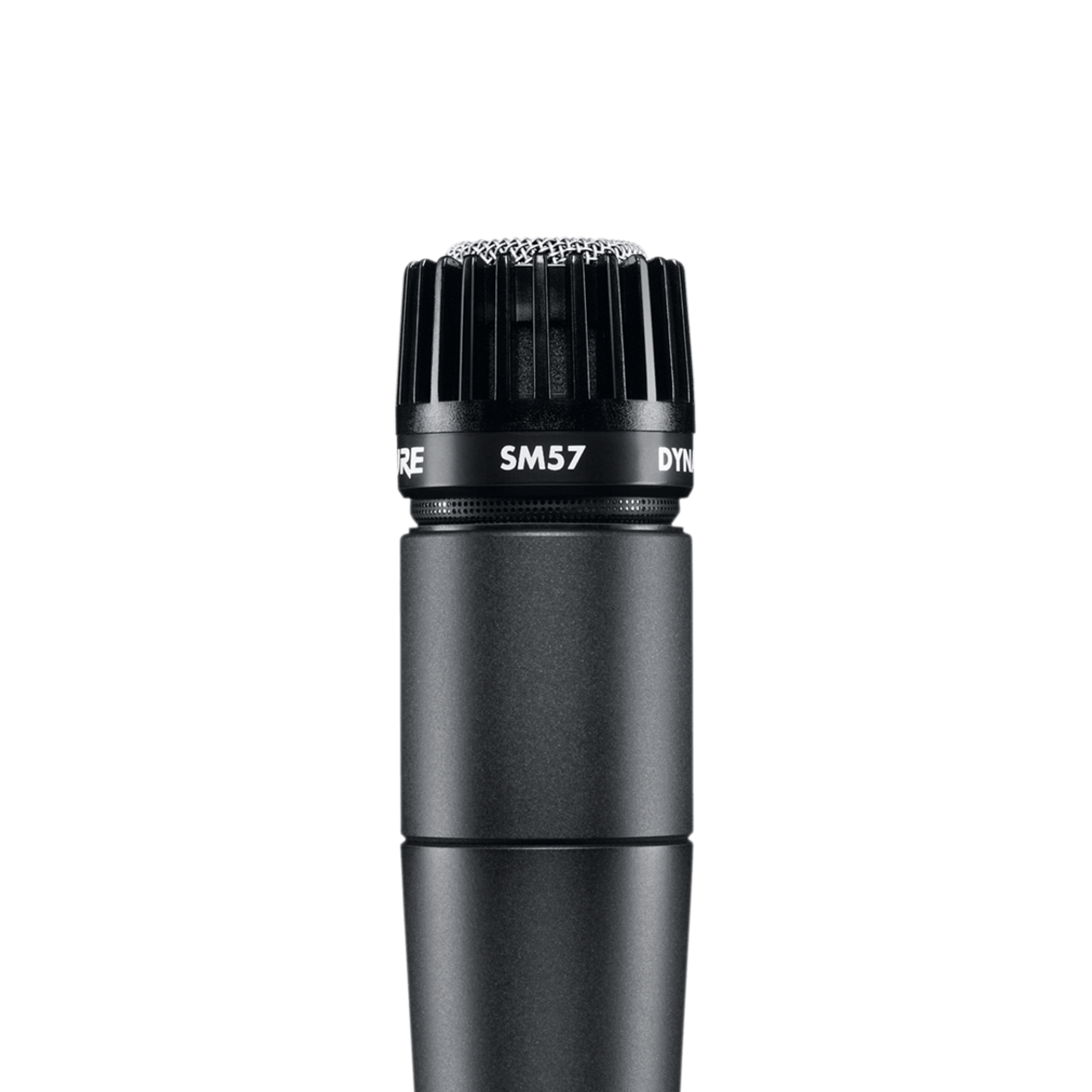
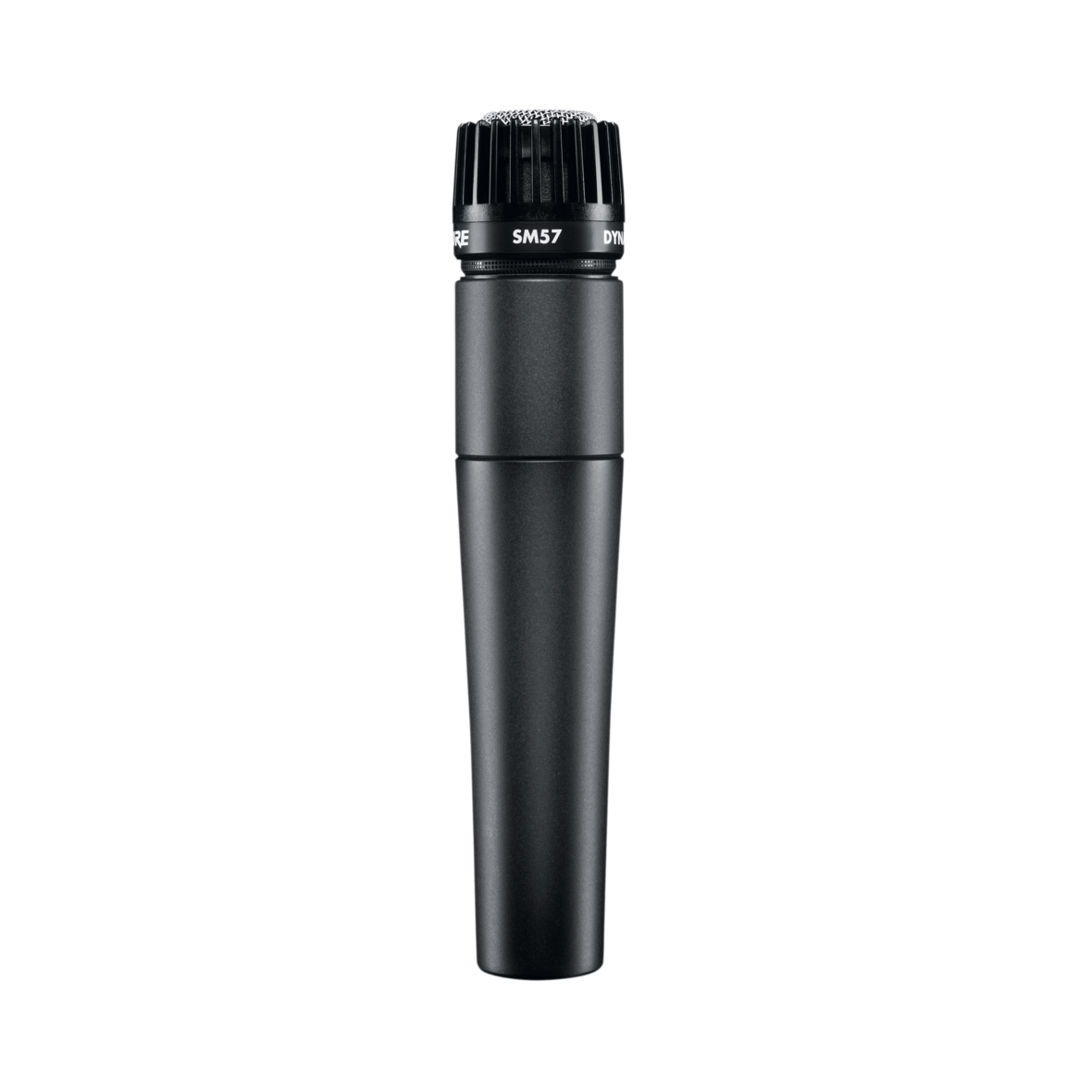
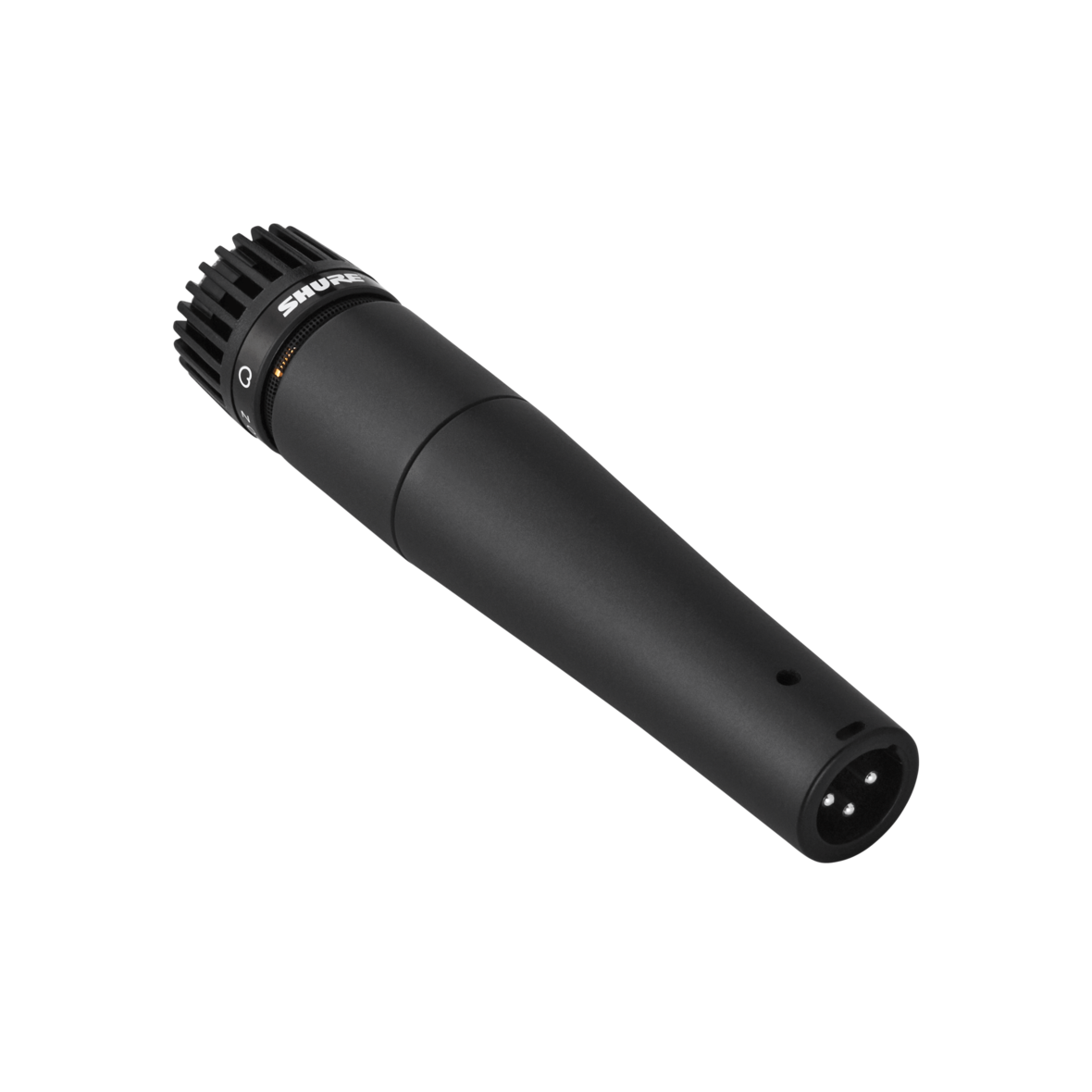
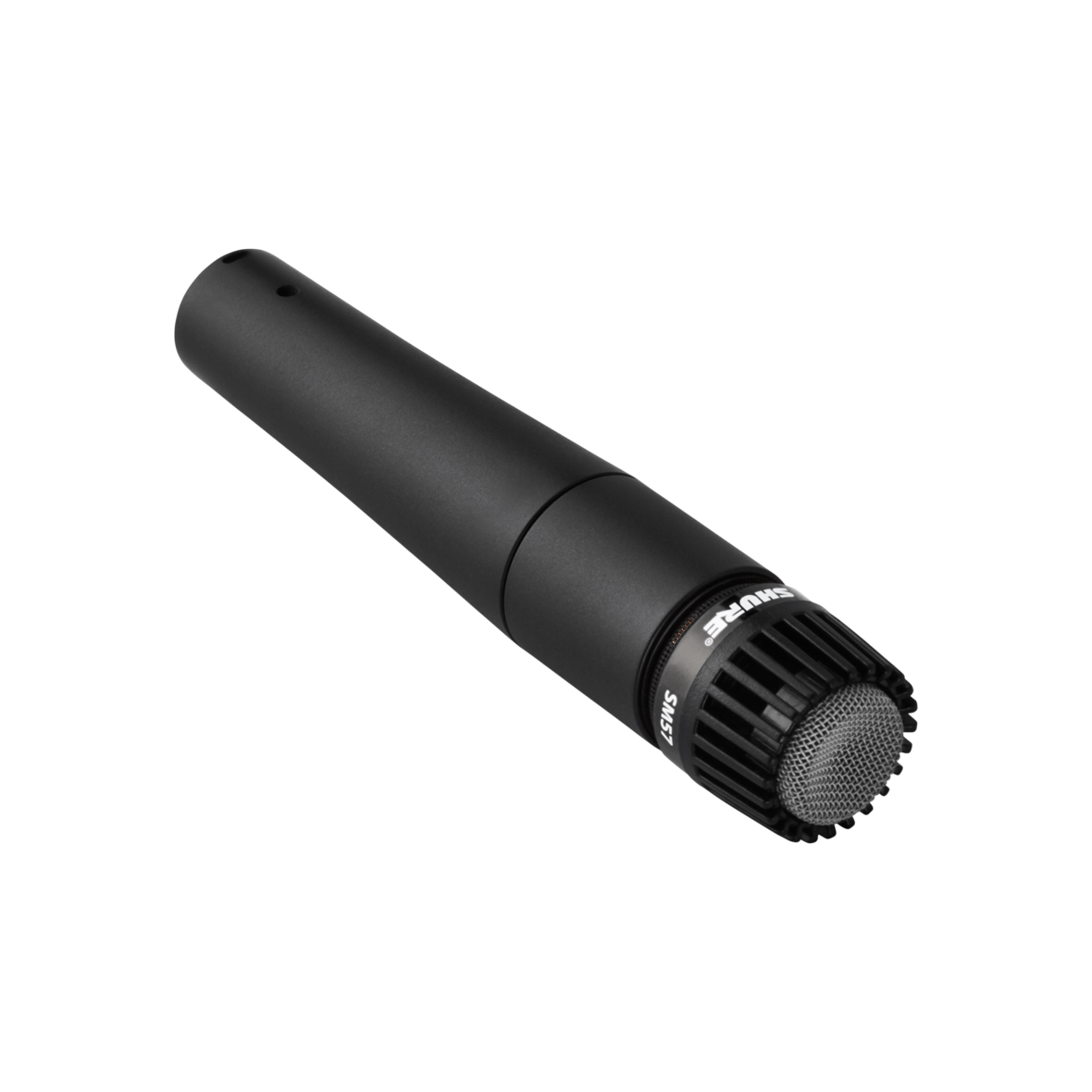
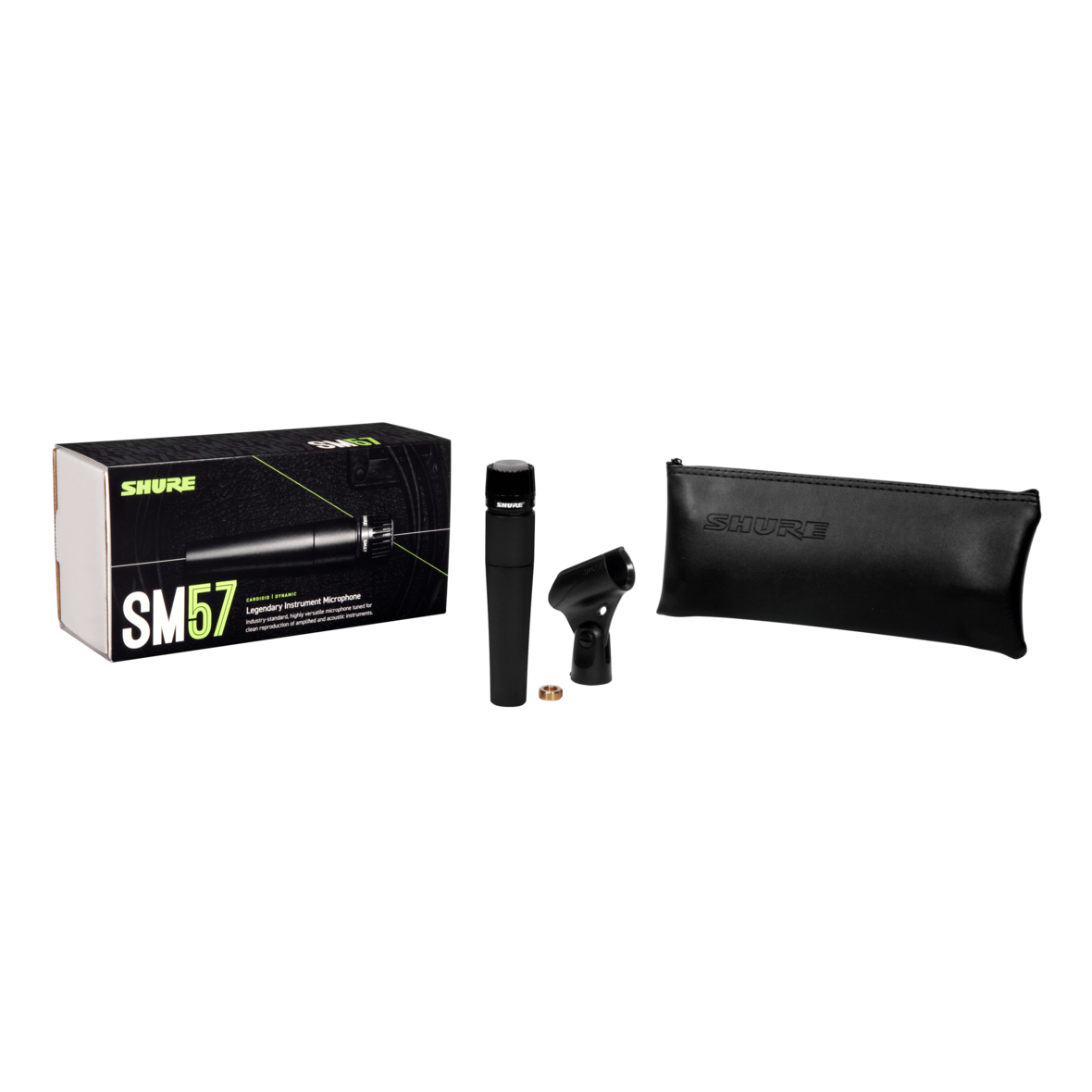
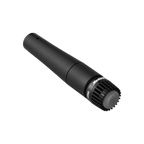
SM57 Dynamic Instrument Microphone
Where to buy
Best suited to:
Snare, Toms,
Electric Guitar,
Percussion
Also great for:
Brass
- Description
- Features
- Specs
- Downloads
- In the box
Description:
What is the SM57 best suited to?
It’s the most popular choice for a professional musician who wants to mic up their amplified or acoustic instrument such as a guitar amp or bass amp, saxophone, trumpet or drums. It is used on stages and in studios around the world.
How does it sound?
The contoured frequency responseThis is the range of frequencies, from the lowest to the highest, that a mic can pick up.
Read moreGo to the glossary with its presence rise, helps the instrument cut better through the main mix. The extremely effective cardioidPicks up most sound in front of the microphone and some from the sides. It is less susceptible to feedback in high volume environments.
Read moreGo to the glossary pickup pattern isolates the main sound source and will simply record what you point at it while rejecting sound from the rear.
Features:
- Contoured frequency responseThis is the range of frequencies, from the lowest to the highest, that a mic can pick up.
Read moreGo to the glossary for clean, instrumental reproduction and rich vocal pickup - Professional-quality reproduction for drum, percussion, and instrument amplifier miking
- Uniform cardioidPicks up most sound in front of the microphone and some from the sides. It is less susceptible to feedback in high volume environments.
Read moreGo to the glossary pickup pattern isolates the main sound source while reducing background noise - Pneumatic shock-mount system cuts down handling noise
- Extremely durable under the heaviest use
- Frequency responseThis is the range of frequencies, from the lowest to the highest, that a mic can pick up.
Read moreGo to the glossary: 40 to 15,000 Hz
Specs:
- Transducer TypeA transducer converts sound into an electrical signal. The two most common types are dynamic and condenser.
Read moreGo to the glossary : DynamicDynamic mics have a simple, rugged construction and can handle very high sound pressure levels.
Read moreGo to the glossary - Polar PatternPolar pattern describes how well the microphone hears sound from different directions.
Read moreGo to the glossary: CardioidPicks up most sound in front of the microphone and some from the sides. It is less susceptible to feedback in high volume environments.
Read moreGo to the glossary -
Frequency ResponseThis is the range of frequencies, from the lowest to the highest, that a mic can pick up.
Read moreGo to the glossary:
40 Hz
- 15 kHz
-
SensitivityThis is how mich signal a microphone produces for a given amount of sound.
Read moreGo to the glossary (1 kHz):
-54,5 dBV/Pa / 1,88 mV/Pa
- Weight: 284 g
- FrequencyThis is how many times a sound or radio wave oscillates in one second.
Read moreGo to the glossary Repsonse Curve:
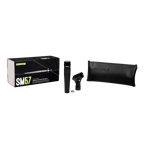
In the box:
- Swivel Stand Adapter (Part No: A25D)
- Storage Bag (95C2313)


