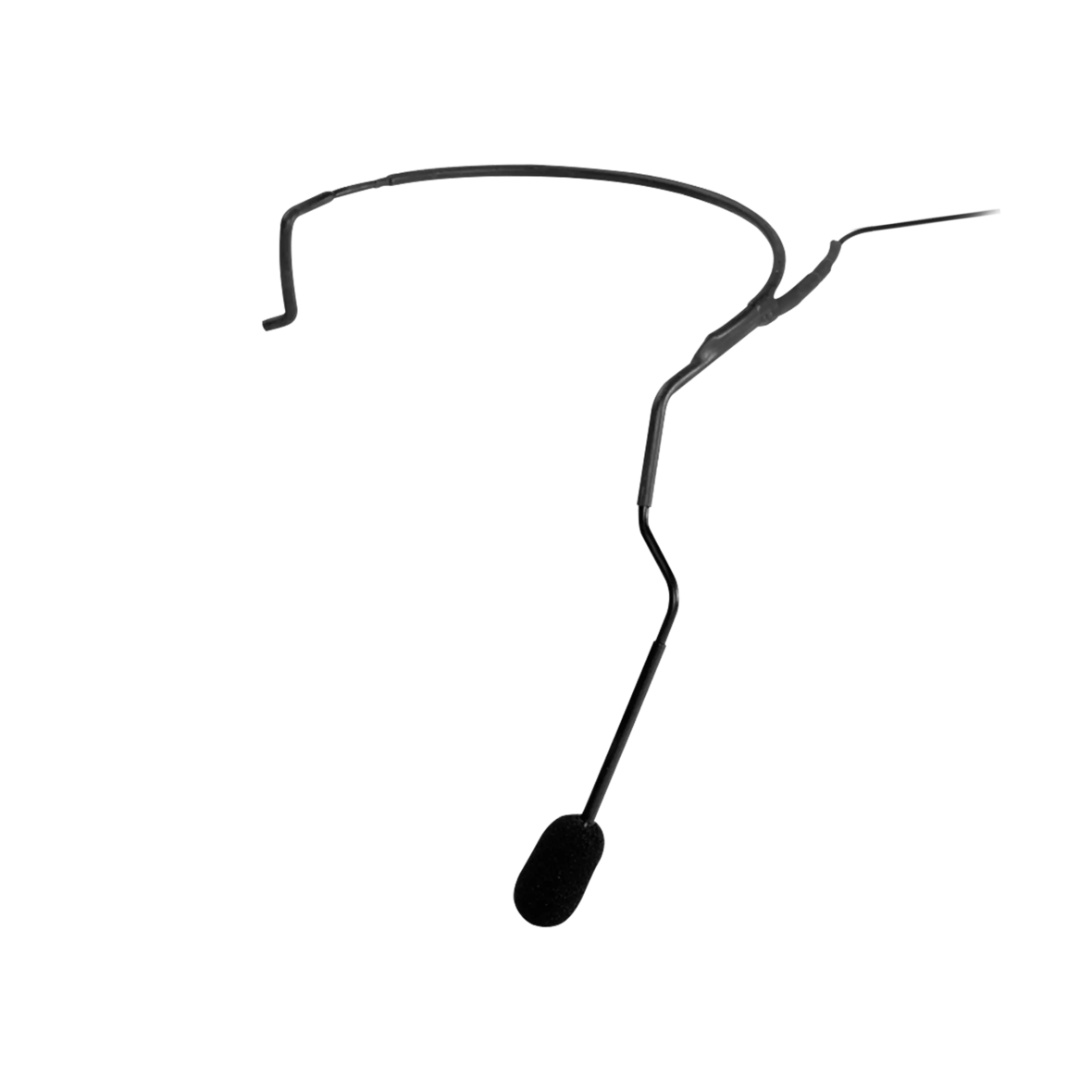

WCM16 Headworn vocal microphone
Where to buy
- Description
- Features
- Specs
- Downloads
- In the box
Description:
What is the WCM16 best suited to?
The Shure Model WCM16 headworn hypercardioidHypercardioid microphones pick up most sound from the front, and very little from the sides.
Read moreGo to the glossary condenser microphoneCondenser microphones are more sensitive, give a smooth, natural sound and need to be powered.
Read moreGo to the glossary is ideally suited to professional performers, lecturers, and others who require the highest quality voice pickup with maximum mobility. Its wide frequency responseThis is the range of frequencies, from the lowest to the highest, that a mic can pick up.
Read moreGo to the glossary, low RF susceptibility and reliable operation at temperature and humidity extremes make the WCM16 suitable for virtually any vocal application.
What is the best position for the mic?
Miniaturized active circuitry included in the cartridge assembly provides equalization that tailors the low-frequency response to resemble the warm proximity effectWith a directional mic, more bass is added when the mic is closer to the sound source.
Read moreGo to the glossary of larger vocal microphones. Because of this low-end response, it is not necessary to position the microphone directly in front of the mouth, thus avoiding popping and breath noise, even without the supplied foam pop screen.
Why Hypercardioid?
The microphone's hypercardioidHypercardioid microphones pick up most sound from the front, and very little from the sides.
Read moreGo to the glossary unidirectional pickup pattern provides maximum isolation from ambient noise and from adjacent sound sources such as musical instruments, loudspeakers and other performers. This permits higher gain-before-feedback without loss or masking of vocals.
Features:
- Extra lightweight, adjustable headband stays secure and virtually disappears while being worn
- Response comparable to finest conventional vocal microphones
- HypercardioidHypercardioid microphones pick up most sound from the front, and very little from the sides.
Read moreGo to the glossary polar patternPolar pattern describes how well the microphone hears sound from different directions.
Read moreGo to the glossary provides maximum isolation from vocalist's own instrument and those of other performers - Uniform polar patternPolar pattern describes how well the microphone hears sound from different directions.
Read moreGo to the glossary at all frequencies for maximum gain before feedbackSustained howl when a mic hears a loudspeaker already reproducing that mic's sound.
Read moreGo to the glossary - High input clipping level eliminates overload distortion
- Cable terminates as 4-pin mini connector
- Supplied acoustic foam pop screen
- Reliable at temperature and humidity extremes
Specs:
- Transducer TypeA transducer converts sound into an electrical signal. The two most common types are dynamic and condenser.
Read moreGo to the glossary : CondenserCondenser microphones are more sensitive, give a smooth, natural sound and need to be powered.
Read moreGo to the glossary - Polar PatternPolar pattern describes how well the microphone hears sound from different directions.
Read moreGo to the glossary: HypercardioidHypercardioid microphones pick up most sound from the front, and very little from the sides.
Read moreGo to the glossary -
Frequency ResponseThis is the range of frequencies, from the lowest to the highest, that a mic can pick up.
Read moreGo to the glossary:
50 Hz
- 18 kHz
-
SensitivityThis is how mich signal a microphone produces for a given amount of sound.
Read moreGo to the glossary (1 kHz):
-55 dBV/Pa / 1,77 mV/Pa
- Equivalent Selfnoise:
29 dB(A)
- Sound Pressure:
150 dB
- Weight: 36 g
- FrequencyThis is how many times a sound or radio wave oscillates in one second.
Read moreGo to the glossary Repsonse Curve:
In the box:
- Windscreen (Part No: 36A624)